How to Prevent Streaks When Cleaning Large Concrete Areas
Few things are more frustrating than spending a full day pressure washing a driveway, patio or commercial forecourt, only to see pale stripes and uneven patches appear as the surface dries. Streaking is the most common complaint after concrete cleaning, and it is almost always preventable. For property owners in Ipswich, where damp weather, coastal air and shaded gardens encourage algae, moss and grime to build up, understanding the causes of streaks is the key to a clean, uniform finish.
Why Streaks Appear on Concrete
Streaks are rarely caused by the cleaning equipment alone. They are usually the result of uneven cleaning conditions, inconsistent technique or surface variations that reveal themselves once the concrete dries. Common causes include:
- Inconsistent lance speed and distance: Moving the nozzle too slowly or holding it too close to the surface removes more dirt in some areas, leaving visible lines.
- Uneven chemical application: Detergents or biocides applied patchily can dry on the surface and leave marks.
- Letting the surface dry mid-clean: Cleaning products that dry before rinsing can leave residue and tide marks.
- Overlapping errors: Passes that do not overlap evenly create a striped, zebra-like effect.
- Mixed surface conditions: Shaded areas with heavy algae and sunny areas with light dust clean at different rates.
- Dirty rinse water: Runoff that settles on cleaner sections can redeposit grime.
Plan the Job Before You Start
Large concrete areas need a systematic approach. Before switching on the washer, sweep away loose debris, leaves and gravel. Remove furniture, planters and vehicles so you can work across the whole surface without stopping. Check the slope of the concrete and note where water will drain, because you should always work so that dirty water flows away from the section you have already cleaned.
It also helps to divide very large areas into manageable zones, such as 2 to 3 metre wide strips or clearly defined bays. Working zone by zone prevents chemicals from drying out and gives you natural boundaries to keep your technique consistent.
Choose the Right Equipment
Use a Surface Cleaner for Flat Areas
A rotary surface cleaner is one of the most effective tools for eliminating streaks. It uses spinning nozzles inside a hooded housing to deliver an even spray pattern across a wide path. Compared with a bare lance, it produces a far more uniform result and usually cleans large slabs faster. For driveways, car parks, patios and warehouse yards, a 15 to 20 inch surface cleaner is a sound choice for most domestic and light commercial work.
Match Pressure and Nozzle to the Surface
If you do use a lance, a 25 degree nozzle is a popular choice for general concrete cleaning, as it covers more area than a narrow zero or 15 degree tip without being too gentle. Avoid the zero degree nozzle on concrete, as it can etch the surface and create permanent lines. Pressure between roughly 2,000 and 3,000 PSI (about 140 to 200 bar) suits most sealed or sound concrete, but older, weathered or newly laid concrete may need lower pressure to avoid damage.
Pre-Treat for Even Results
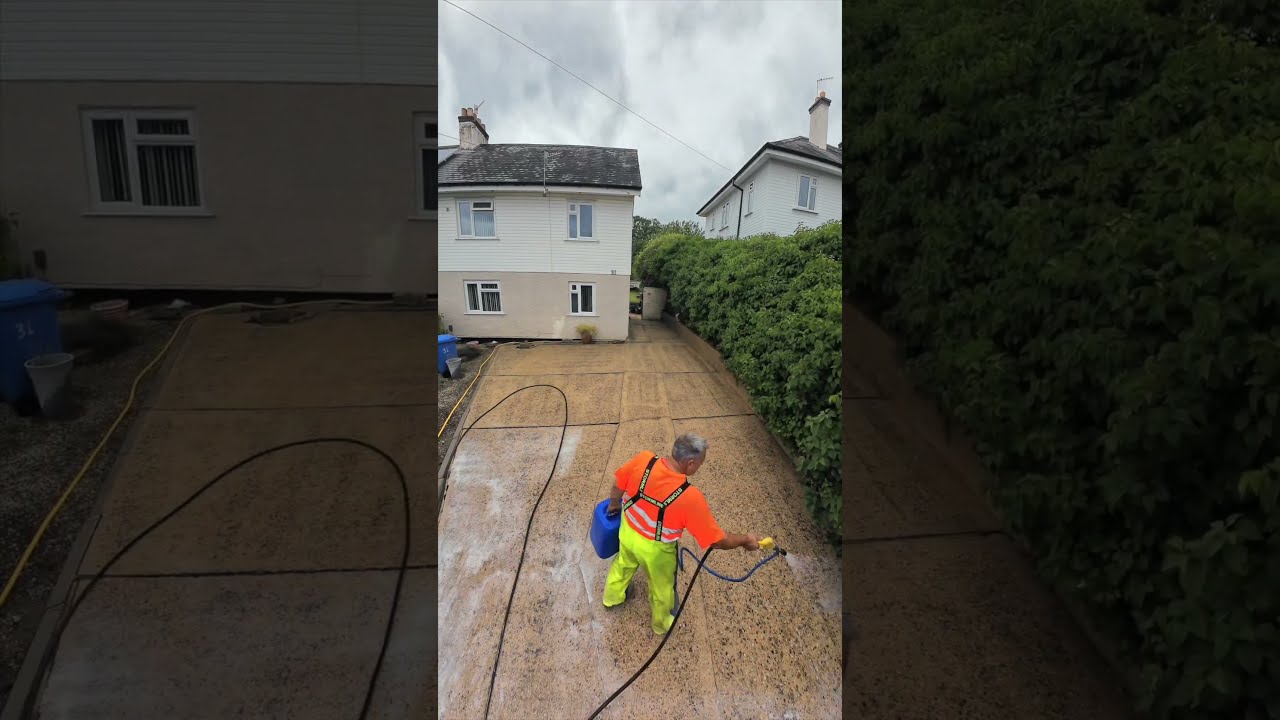
Pre-treating the concrete is often the difference between a streaky finish and a consistent one. In Ipswich, green algae and black mould are common, particularly on north-facing drives and areas under trees. Applying a suitable biocide or concrete cleaner first loosens organic growth so that the pressure washer does not have to work as hard, which reduces the chance of lines.
- Wet the concrete lightly with clean water first so the product spreads evenly and does not soak in unevenly.
- Apply the cleaner with a low-pressure sprayer or downstream injector, working in overlapping passes.
- Keep the surface wet with product, and never allow it to dry.
- Allow the recommended dwell time, usually 10 to 20 minutes, and always check the manufacturer's instructions.
- Agitate stubborn areas with a stiff broom before rinsing.
Technique: How to Avoid Lines and Stripes
Consistent technique matters more than raw power. Keep the nozzle or surface cleaner at a steady height and move at an even speed. Overlap each pass by around 10 to 25 per cent so there are no gaps between strokes. Where possible, work in straight, parallel lines and avoid stopping mid-stroke, which can leave a noticeable spot.

Always work from the highest point of the concrete down to the lowest, and from the furthest point back towards your exit. This keeps you from walking over or splashing dirty water on finished sections. Where a surface is shaded or particularly dirty in places, make a second pass over those areas rather than concentrating the lance in one spot.
Control the Weather and Drying Conditions
Weather has a bigger impact than many people realise. Cleaning in direct, hot sunshine or strong wind causes chemicals and rinse water to dry too quickly, which leaves residue and uneven tones. On the other hand, cleaning in heavy rain makes it difficult to judge your results. Overcast, mild and dry days are ideal. In the East of England, early morning or late afternoon during the warmer months often gives the best balance of working time and drying conditions.
If you are cleaning https://elliottntqi734.readspirex.com/posts/a-quick-guide-to-pressure-washing-colorbond-metal-roofs a large area, avoid starting a section you cannot finish. Complete each zone from pre-treatment through to the final rinse before moving on.
Rinse Thoroughly and Manage Runoff
A good final rinse removes any detergent, loosened dirt and biological matter that might otherwise dry as streaks. Rinse from the top of the slope downwards with plenty of clean water, and pay attention to joints, edges and low spots where dirty water can pool. Using a squeegee or leaf blower to move standing water can help to prevent tide marks in hollows.
Responsible runoff management is also important. Cleaning products, oils and sediment should not be allowed to enter surface water drains, which discharge to local watercourses without treatment. Check the current guidance from the Environment Agency and your local council, and consider using drain covers or a recovery system on commercial sites or where harsher chemicals are used.
Deal With Stains Separately
Oil, rust, tyre marks and paint do not respond to general cleaning in the same way as algae or surface dirt, and treating them with a pressure washer alone can leave bright patches that look like streaks. Treat these stains first with a purpose-made degreaser, rust remover or poultice, then clean the whole surface so the finish blends together. Test any product in a hidden area before using it more widely.
Consider Sealing After Cleaning
Once the concrete is clean and fully dry, a quality breathable sealer can help to protect it from new algae, oil and weathering. Sealing also helps to even out the appearance of the surface and makes future cleaning easier. Allow the concrete to dry completely, often 24 to 48 hours depending on conditions, before applying any sealer, and follow the manufacturer's guidance for application and curing.
When to Call a Professional in Ipswich
DIY cleaning can work well on small to medium areas, but large concrete surfaces demand time, the right equipment and experience. Professional cleaners use commercial-grade surface cleaners, hot water systems where appropriate and proven treatment methods that deliver a consistent finish across the whole area. They also understand how to handle local conditions, such as shaded driveways, salt-laden air and older concrete that needs gentler treatment.
If you manage a large driveway, yard, car park or commercial site in Ipswich and want a streak-free result, a professional concrete cleaning service can save you time, protect your surface from damage and give you a finish that lasts. Contact a reputable local provider for a quote and ask about their pre-treatment, equipment and runoff management methods to ensure the job is done properly.
Key Takeaways
Preventing streaks comes down to preparation, the right tools and disciplined technique. Pre-treat the surface, use a rotary surface cleaner where possible, work in controlled zones, keep your passes consistent and rinse thoroughly. Pay attention to weather and drainage, treat stains separately, and finish with a sealer if appropriate. With these steps, even the largest concrete areas can look uniformly clean and well maintained throughout 2026 and into 2027 and beyond.
Ipswich Pressure Cleaning Pros
(07) 3278 0498